Why preventing cross-contamination is essential
Every dental procedure involves contact with saliva, blood, aerosols and potentially contaminated surfaces. For this reason, the prevention of cross-contamination is one of the cornerstones of clinical safety and quality of care.
The leading international organisations in the sector agree that infection control should be based on an integrated approach, comprising hand hygiene, the correct sterilisation of instruments, the management of environmental surfaces and the appropriate use of disposable devices.
Strict adherence to these protocols helps to protect patients and healthcare workers by reducing the risk of transmission of micro-organisms during day-to-day clinical practice. (Source: https://www.cdc.gov/dental-infection-control/hcp/dental-ipc-faqs/index.html).
- Handling of instruments
The management of instruments is one of the most critical stages of the entire infection control process.
After each use, reusable instruments must follow a controlled process comprising collection, cleaning, packaging, sterilisation and storage, thereby preventing any possibility of contamination during the various stages.
Incorrect handling may compromise the effectiveness of the sterilisation process and increase the risk of accidental exposure for staff.
The standardisation of procedures and adherence to operational protocols are essential to ensuring the safety of clinical practice. (Source: https://www.cdc.gov/dental-infection-control/hcp/dental-ipc-faqs/index.html)
- Clinical work services
Surfaces in the clinical area are frequently touched during procedures and can become a major vehicle for the transmission of micro-organisms.
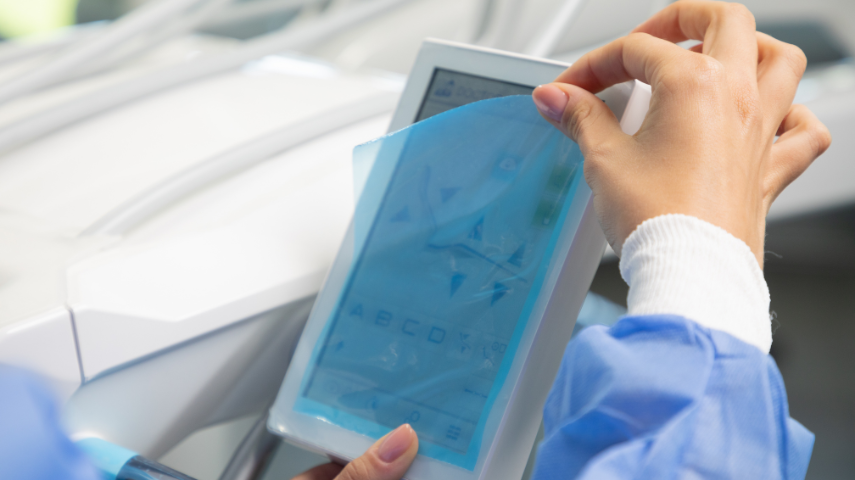
Dental units, lamps, keypads, handles, control buttons and worktops must be properly cleaned and disinfected between patients, in accordance with established protocols.
Surface management is one of the key aspects of infection prevention measures and helps to maintain a safe clinical environment. (Source: https://www.ada.org/resources/ada-library/oral-health-topics/infection-control-and-sterilization)
- Capes, cups, dental unit covers and items to be replaced for each patient
One of the aspects most frequently overlooked is the correct replacement of all materials intended for a specific patient.
Disposable bibs, cups, saliva ejectors, dental unit covers, handle covers and other barrier devices must be replaced after each treatment to prevent any contaminants from being transferred to the next patient.
The systematic use of these materials helps to support infection control protocols, reducing the risk of cross-contamination and simplifying the day-to-day running of the practice. (Source: https://www.cdc.gov/dental-infection-control/hcp/dental-ipc-faqs/index.html)
- Aerosol extraction and management
Many dental procedures produce aerosols containing particles of saliva, blood and micro-organisms.
To limit the spread of these, it is essential to establish appropriate organisational and technical measures, including the use of high-efficiency extraction systems, adherence to sanitisation procedures and the correct application of standard precautions.
Aerosol management is now one of the most important aspects of infection control in dental practices and requires a multidisciplinary approach involving procedures, training and the organisation of the practice. (Source: https://onlinelibrary.wiley.com/doi/10.1111/idj.12557).
- Disposable materials: a practical support for prevention
Disposable devices are a key component of infection prevention protocols.
As these are designed for single use, they eliminate the need for reprocessing and help to reduce the risk of cross-contamination between patients.
The incorporation of disposable materials into organisational protocols also promotes greater standardisation of procedures, improves operational efficiency and helps ensure compliance with the measures set out in international guidelines.
The appropriate use of these devices must always form part of a comprehensive infection control programme that includes hand hygiene, the use of personal protective equipment, the sterilisation of instruments and the sanitisation of surfaces. (Source: https://www.cdc.gov/dental-infection-control/hcp/dental-ipc-faqs/index.html).
An integrated approach to ensuring safety and quality of care
The prevention of cross-contamination does not rely on a single procedure, but rather on the consistent application of a set of measures covering every stage of clinical practice.
From the correct handling of instruments to the sanitisation of surfaces, and from aerosol control to the use of disposable devices, every detail helps to create a safer working environment and protect the health of patients and healthcare staff.
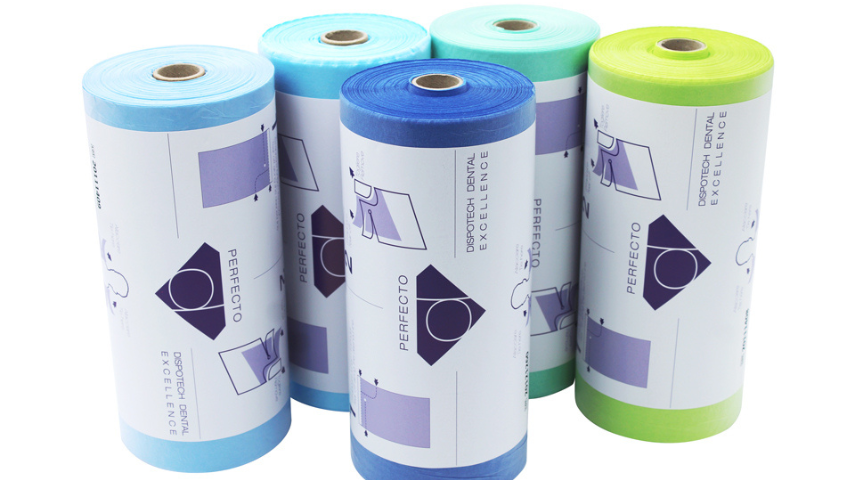
Within this context, Perfecto by Dispotech solutions support dental practices with a range of disposable devices designed to facilitate the implementation of infection control protocols, helping to improve organisation, safety and efficiency in day-to-day clinical practice.