From dental prevention to safety in the dental practice
October is traditionally an important time for raising awareness of oral health, thanks in part to the initiatives promoted by ANDI as part of Dental Prevention Month.njm
A focus on regular check-ups, professional hygiene and early diagnosis offers dental practices the opportunity to strengthen their relationship with patients and promote greater awareness of the importance of prevention.
However, alongside the patient’s oral health, the management of clinical hygiene aspects within the practice plays an equally central role.
Every dental appointment requires a suitably prepared environment, appropriate protective equipment and strict procedures to minimise the risk of cross-contamination between patients.
Within this context, the use of disposable protective barriers plays an important role in ensuring safety and the smooth running of day-to-day activities, particularly in facilities with a high volume of appointments.
Dental hygiene protocols: management the dental unit between appointments
A professional oral hygiene appointment involves contact with saliva, aerosols, instruments and surfaces that may be exposed to contamination.
For this reason, the correct management of the dental unit is one of the key aspects of infection prevention protocols.
Between patients, it is necessary to remove any disposable materials that have been used, clean and disinfect the relevant surfaces, and prepare the treatment area for the next patient.
The frequency of appointments requires a system of organisation capable of ensuring that procedures are carried out correctly without causing avoidable delays in clinical work.
Particular attention must be paid to surfaces that come into frequent contact with patients and professionals, such as headrests, armrests, chair controls, handholds and components of equipment used whilst seated.
The use of appropriate disposable protective equipment helps to limit direct exposure of these surfaces, thereby facilitating a more organised approach to preparing the unit for the next patient.
It is important to remember that protective barriers do not replace the sanitisation measures set out in the practice’s protocols, but are instead designed to complement them.
Non-woven fabric unit cover: protection, comfort and practicality
Among the solutions used to protect the dental chair, disposable dental unit cover sets are particularly useful in the day-to-day running of the practice.
Their function is to create a barrier between the patient and the surfaces of the dental unit, limiting direct contact and helping to protect the finishes during procedures.
Non-woven fabric is one of the materials used for this type of product, thanks to its combination of strength, softness and breathability.
Compared with a hard cover, a non-woven fabric dental unit cover can offer a more comfortable feel, particularly during lengthy treatments.
Ease of application is also an important factor.
A device designed to adapt to different chair configurations enables staff to set up the workstation more easily, thereby enabling greater standardisation of procedures.
The availability of matching covers for the headrest, backrest and seat also ensures more comprehensive protection of the surfaces that come into contact with the patient.
Disposable protective barriers: reducing turnover times between patients without compromising on safety
One of the most important aspects of organising a dental practice regards chair turnover – or in other words, the series of procedures required to prepare the dental unit between two patients.
Effective management of this phase contributes to improved operational efficiency and the continuity of clinical activities.
The use of disposable materials that are easy to fit and remove helps to simplify certain procedures, particularly when surfaces have complex shapes or are difficult to access.
The protective covers can be incorporated into a structured protocol that provides for:
- removal of the protective materials used, taking care not to contaminate the surrounding surfaces;
- disposal of materials in accordance with the practice’s procedures;
- cleaning and disinfection of surfaces, depending on the risk and the applicable guidelines;
- fitting of new disposable protective coverings to the identified areas;
- final check of the treatment area before the next patient arrives.
The ability to replace protective covers quickly can help to optimise set-up times, provided that the necessary infection control procedures are followed.
A well-organised protocol also helps to standardise staff working practices, improving the management of procedures and reducing the risk of oversights.
Visible hygiene: how disposable protective equipment affects the patient experience
A focus on hygiene is not limited to the technical aspects of dental practice; it also contributes to the overall perception of the clinical environment.
A tidy workstation, materials laid out correctly and protective equipment replaced between appointments convey a sense of professionalism and attention to detail.
For the patient, seeing a dental chair set up with clean covers and disposable materials can be reassuring during their visit to the practice.
So-called ‘visible hygiene’ therefore plays an important role in the relationship between the professional and the patient, helping to highlight some of the measures taken to promote prevention.
Within this context, the choice of coordinated materials and consistent colour schemes can also enhance the clinic’s aesthetic identity.
Protective drapes, unit covers and other disposable materials can be integrated into the clinical environment, fostering a sense of order, care and visual consistency.
Of course, aesthetics do not in themselves guarantee clinical safety, but they can complement rigorous protocols and help to improve the patient’s comfort during the treatment session.
Perfecto by Dispotech: comprehensive solutions for protecting dental units
To meet the hygiene and organisational needs of dental practices, Perfecto by Dispotech offers a range of disposable products designed to protect patients, surfaces and equipment.
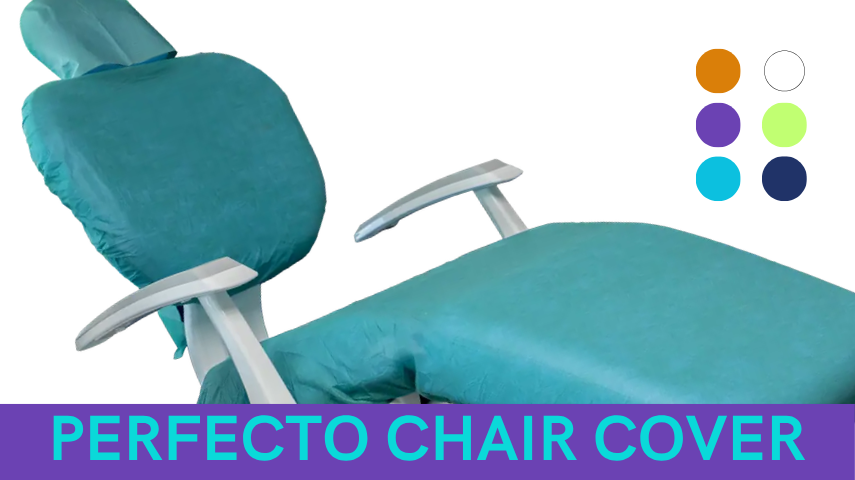
Among the available options, the Perfecto Chair Cover is a dental unit cover kit comprising three parts: headrest cover, backrest cover and seat cover.
Made from soft, breathable non-woven polypropylene fabric, this set is universal and designed to fit all types of dental units thanks to its elastic straps and fastening systems.
The range of colours available also makes it possible to match the chair cover with other disposable items in the clinical setting.
In addition to the protection for the dental unit, there are a number of other solutions designed specifically for the equipment and surfaces most exposed to contact.
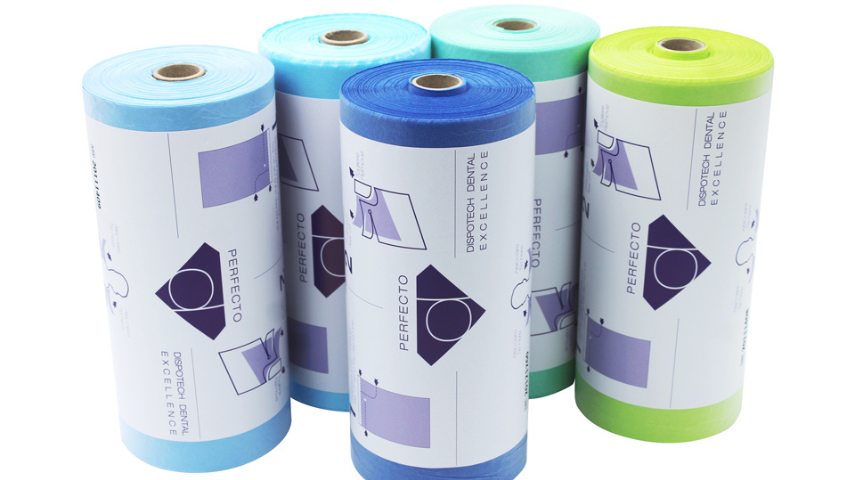
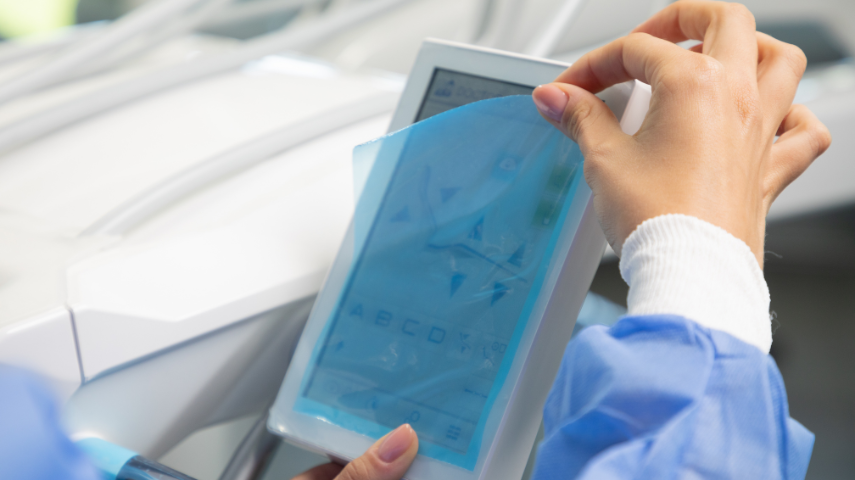
Perfecto Barrier Film, for example, is a single-use polyethylene adhesive film, available in rolls with pre-cut perforations, designed to protect compatible surfaces and components without leaving any residue after removal.
The Perfecto Protective Sleeves range, meanwhile, comprises protective sleeves for curing lights, intra-oral cameras and radiographic sensors, helping to limit direct contact between the equipment and contaminants.
When selecting a barrier for the handles of spotlights and dental lighting units, the choice must always take into account compatibility with the equipment and the manufacturer’s instructions, ensuring that it does not interfere with the optical surfaces or the correct operation of the device.
The inclusion of unit covers, surface protectors and instrument sleeves enables the hygiene protocol to be organised in a more consistent manner, without compromising on ease of use.
Protection and organisation: the value of a safe appointment
Evolutions in dental practice call for constant attention not only to the quality of treatment, but also to the management of the environment in which it is carried out.
The adoption of structured hygiene protocols, combined with the appropriate use of disposable devices, helps to minimise the risk of cross-contamination and makes the organisation of appointments more efficient.
For professionals, this means being able to rely on more standardised procedures and materials that are easy to manage. For patients, this means benefiting from an environment in which safety and attention to detail form an integral part of the clinical experience.
As part of this, Perfecto by Dispotech supports dentists, dental hygienists and dental clinics with solutions designed to combine protection, comfort and practicality.
From non-woven fabric unit covers to surface and instrument barriers, the Perfecto range by Dispotech enables specific products to be incorporated into daily protocols, helping to enable more organised and functional management of the clinical workstation.
Because the quality of preventive care calls for attention to every stage of the appointment, from preparing the treatment unit right through to welcoming the next patient.