Is your practice really ready for the months when flu and respiratory viruses start to circulate more widely again?
With the arrival of autumn, the increased circulation of flu, respiratory syncytial virus (RSV) and other respiratory viruses makes this time of year a good opportunity to review the infection prevention and control procedures in dental practices.
It is not a question of introducing special protocols or completely changing the clinical routine; infection control procedures form part of the practice’s day-to-day work throughout the year.
However, the start of the flu season can be the right time to check that behaviours, responsibilities, materials and procedures are still clear, being followed and adequately supported by available stock.
The ECDC points out that respiratory viruses can circulate not only in the community, but also in hospitals, clinics and other healthcare settings.
The prevention measures highlighted include hand hygiene, patient management, the appropriate use of personal protective equipment, cleaning of premises and ventilation. ECDC – Europe enters respiratory virus season ECDC – Infection prevention and control practices for respiratory viral infections
Infection control in dental practices: starting with the standard precautions
In the dental sector, the starting point remains the standard precautions: that is, the minimum infection prevention practices which, according to the CDC, must be applied when treating all patients, regardless of whether an infection is suspected or confirmed.
For a dental practice, these include, amongst other things:
- hand hygiene;
- use of personal protective equipment;
- respiratory hygiene and cough etiquette;
- safety in the handling of sharp instruments;
- safe injection practices;
- sterile instruments and devices;
- cleaning and disinfection of surfaces in the environment.
Staff training plays an important role, as it is essential for the team to be able to apply the prescribed procedures correctly and use the available equipment appropriately. CDC – Standard Precautions in Dental Settings
Autumn can therefore serve as an organisational milestone: not to create new rules, but to ensure that those already in place are widely known, easy to apply and consistently incorporated into day-to-day practice.
Management of patients with respiratory symptoms: getting organised before getting them to take a seat
One of the areas to be assessed concerns the management of patients and any accompanying persons showing respiratory symptoms.
Dental practices are advised to implement systems that enable the early identification and management of potentially infectious patients as soon as they enter the premises.
For non-urgent dental treatment, consideration may be given, where appropriate, to rescheduling the appointment until the patient is no longer infectious. CDC – Standard Precautions in Dental Settings
The reception and the waiting room are therefore also part of the prevention system. The CDC’s guidance on respiratory hygiene includes clear information for people with symptoms, the provision of tissues and bins for disposal thereof, hand hygiene facilities in waiting areas, and measures to help contain respiratory secretions.
Patient care therefore begins even before the patient enters the treatment area. CDC – Standard Precautions in Dental Settings
Hand hygiene: a simple procedure that should never be taken for granted
Hand hygiene represents one of the key elements of the standard precautions.
In a dental setting, the CDC recommends practising hand hygiene before and after treating each patient, before putting on gloves and immediately after removing them, as well as after bare-handed contact with potentially contaminated instruments, equipment or materials.
When hands are visibly dirty, soap and water must be used; In other cases, alcohol-based products may be used in accordance with the instructions provided. CDC – Standard Precautions in Dental Settings
The autumn season can therefore be an opportunity to check not only that the necessary products are in place, but also that they are correctly positioned in the areas where they are actually used.
PPE: availability, correct use and team training
Gloves, face masks, eye protection, face shields and protective clothing are essential items when the nature of the procedure and the risk of exposure call for their use.
Appropriate PPE must be available in the workplace in sufficient quantities, and staff must be trained in how to select, put on, use and remove it.
Gloves, for example, must not be used on more than one patient and must not be washed or reused. Hand hygiene practices must be observed after they have been removed. CDC – Standard Precautions in Dental Settings
The ECDC also emphasises the importance of ensuring the availability and appropriate use of PPE in healthcare settings, tailoring the choice of PPE to the level of risk and the type of care provided. ECDC – Infection prevention and control practices for respiratory viral infections
For this reason, the autumn inspection should also include a practical check of stocks and the accessibility thereof: the right device must be available wherever and whenever it is needed.
Surfaces and equipment: preventing cross-contamination between one patient and the next
Lamps, dental unit switches, trays, controls and IT equipment in the clinical area may become contaminated by sprays and splashes produced during procedures or through contact with contaminated gloves.
For clinical contact surfaces that are difficult to clean, the CDC recommends the use of protective barriers, which must be replaced between one patient and the next.
When the barriers are not in use, the surfaces must be cleaned and disinfected in accordance with the correct procedures. CDC – Environmental Infection Prevention and Control in Dental Settings
A seasonal review can be useful to ensure that all frequently touched surfaces are clearly covered by the practice’s protocols and that barrier materials are readily available at workstations.
The ECDC also draws attention to frequently touched surfaces, listing cleaning and disinfection amongst the environmental measures that can help prevent respiratory infections. ECDC – Preventive measures against influenza
Ventilation and communal areas
Infection control is not limited to what happens directly around the dentist’s chair.
The ECDC considers ventilation to be an important environmental measure for reducing the transmission of respiratory infections, and recommends ensuring an adequate exchange of air with the outside, either by opening windows where appropriate or by checking that any installed ventilation systems are working correctly. ECDC – Preventive measures against influenza
The reception area, waiting room and other communal spaces should therefore be included in the practice’s operational checks, along with frequently touched surfaces such as door handles, keyboards and screens.
Stock and organisation: prevention also means being prepared
A procedure can only work properly if staff have the necessary materials to implement it.
In its Infection Prevention Checklist for the dental sector, the CDC explicitly states the need to ensure that the practice has appropriate policies and procedures in place, suitably trained staff and sufficient supplies to guarantee safe care and a safe working environment. CDC – Infection Prevention Checklist for Dental Settings
At the start of autumn, it may therefore be worth checking the available quantities, storage methods and reordering frequency of the main consumables.
It is not necessary to wait until a critical issue arises to realise that a device is missing: establishing internal responsibilities and ensuring that stock levels are consistent with the practice’s consumption helps to ensure day-to-day operational continuity.
Training and periodic review of procedures
Stock control, on its own, is not enough.
Dental staff must periodically review the procedures in place at their practice and ensure that they meet the minimum standards for safe care.
The CDC checklist was developed specifically as an assessment tool: it enables the verification of the existence of procedures, staff training, and the actual compliance of the behaviour observed during day-to-day activities. CDC – Infection Prevention Checklist for Dental Settings
The start of the autumn–winter season can therefore serve as a recurring opportunity to review procedures with the team, clarify any doubts and address any issues before they interfere with clinical practice.
Autumn-winter checklist for dental practices
☐ Are there sufficient quantities of face masks, gloves and other necessary PPE available?
☐ Do staff practise hand hygiene correctly before and after seeing each patient?
☐ Is PPE replaced at the prescribed intervals and, in any case, between patients when necessary?
☐ Are clinical contact surfaces protected or cleaned and disinfected between one patient and the next?
☐ Are handles, lamps, controls, keypads and other frequently touched surfaces clearly included in the sanitisation procedures?
☐ Are disposable protective items readily available near the workstations where they are used?
☐ Have procedures been put in place for patients presenting with respiratory symptoms?
☐ Are there clear instructions on respiratory hygiene in the reception area and waiting room?
☐ Is the ventilation and air-exchange system operating correctly?
☐ Are stocks of key consumables checked regularly?
☐ Are there minimum reorder levels to prevent stock-outs?
☐ Do staff members know the procedures for putting on and removing PPE?
☐ Are infection control procedures reviewed on a regular basis?
☐ Is there sufficient stock of products to cope with any increases in consumption?
☐ Does the whole team know their responsibilities and the procedures that must be followed?
The logic behind the checklist reflects with the approach proposed by the CDC, which calls on dental practices to periodically review their procedures, monitor staff compliance, provide adequate training and ensure that the necessary supplies are available. CDC – Infection Prevention Checklist for Dental Settings
Prevention also means having the right equipment in the right place when you need it
Effective infection control depends on the integration of procedures, training, the organisation of spaces and the availability of materials.
For dental practices, beginning the autumn period with a structured review means reinforcing procedures that are important throughout the year, improving the operational continuity of the team and helping to create a more organised clinical environment for both staff and patients.
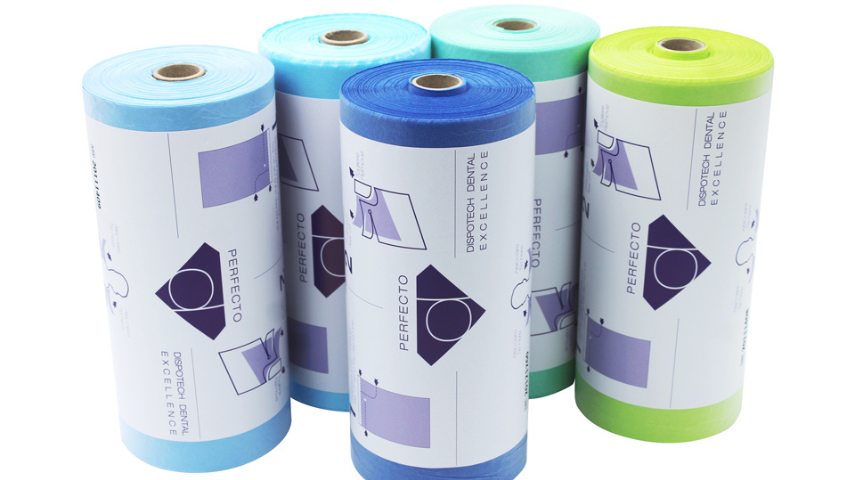
Within this context, Perfecto by Dispotech single-use solutions can support the day-to-day running of practices by providing materials for protection, workstation management and clinical activities. Ensuring that consumables are readily available at the points where they are actually used helps teams to turn prescribed procedures into simple, repeatable behaviours that are integrated into their daily routine.